Mechanical Engineering · Space Systems · Campus Technology

JAYSON JOHNSON

Engineering thermal systems for space and building tools that make campus life less chaotic and more human.

Senior Mechanical Engineering student at Howard University and Karsh STEM Scholar. My work moves between CFD, machine learning, and product design, from self-cleaning solar panels and ISS payload modeling to Rooted, a campus hub used by students every day.

Howard University · Mechanical Engineering
MIT MSRP · Hypersonics Lab
Muon Space · Space systems
Co-founder · Rooted: University Hub
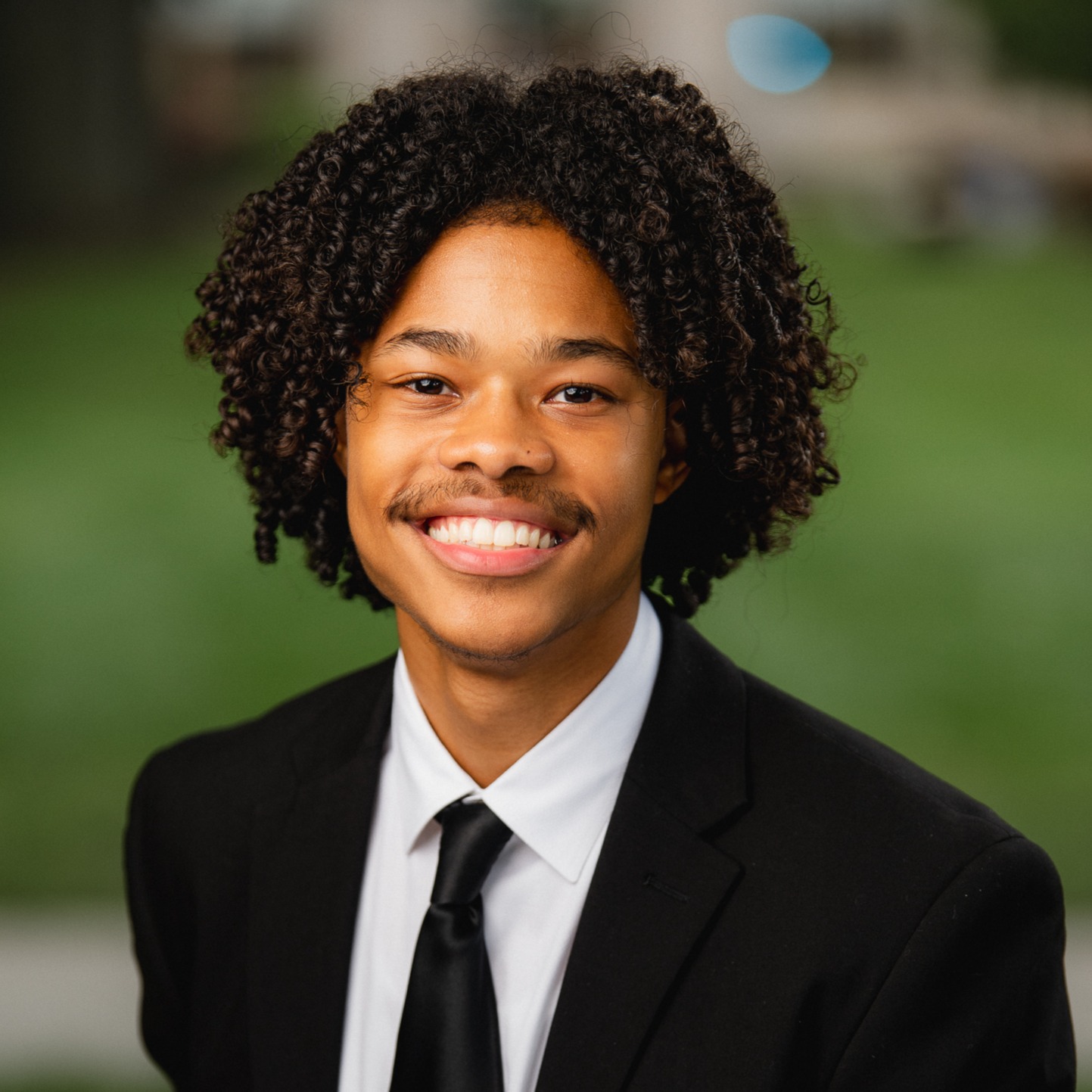
Jayson Johnson portrait
MIT Hypersonics
My Story
A path shaped by research and people
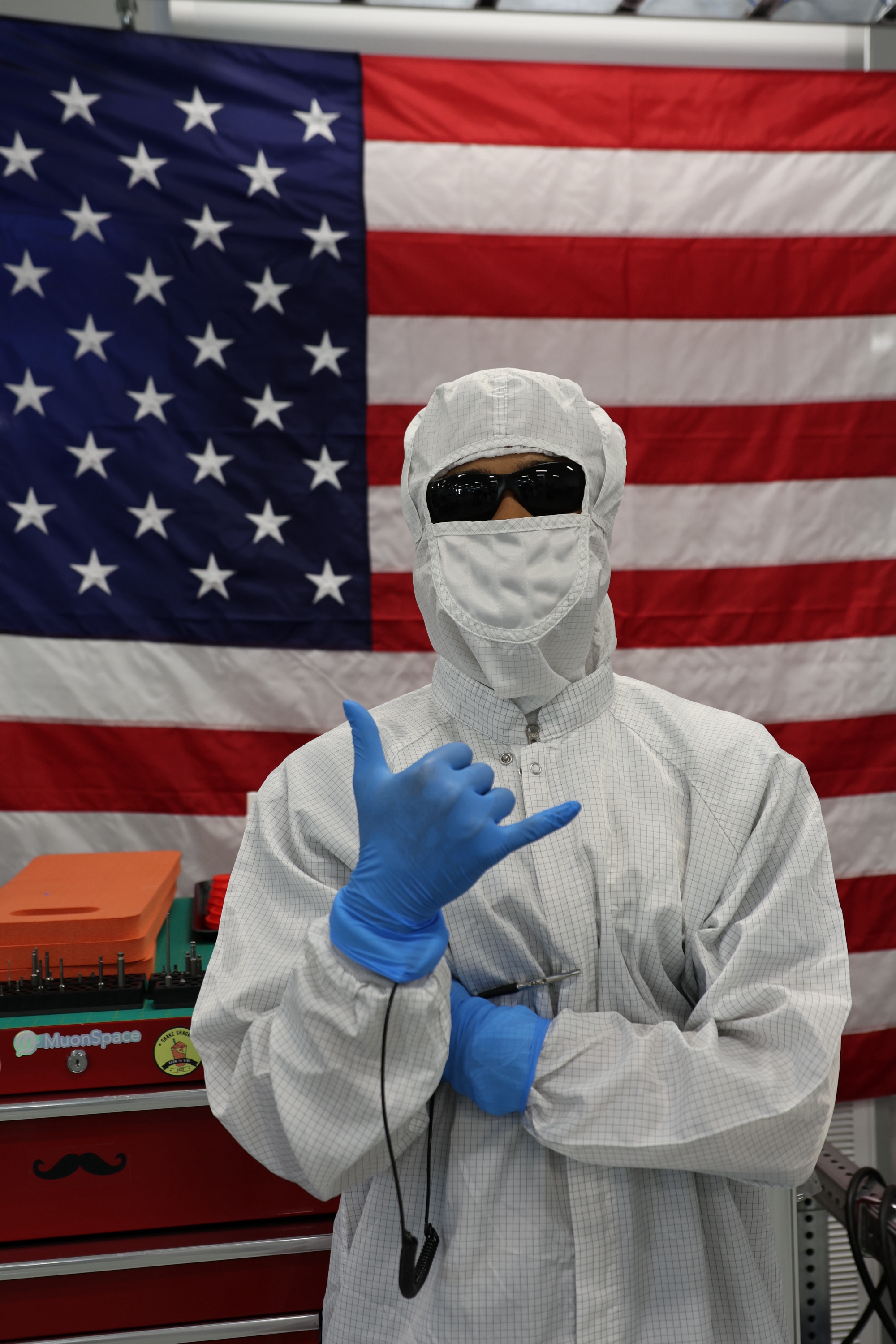
Jayson at Muon Space
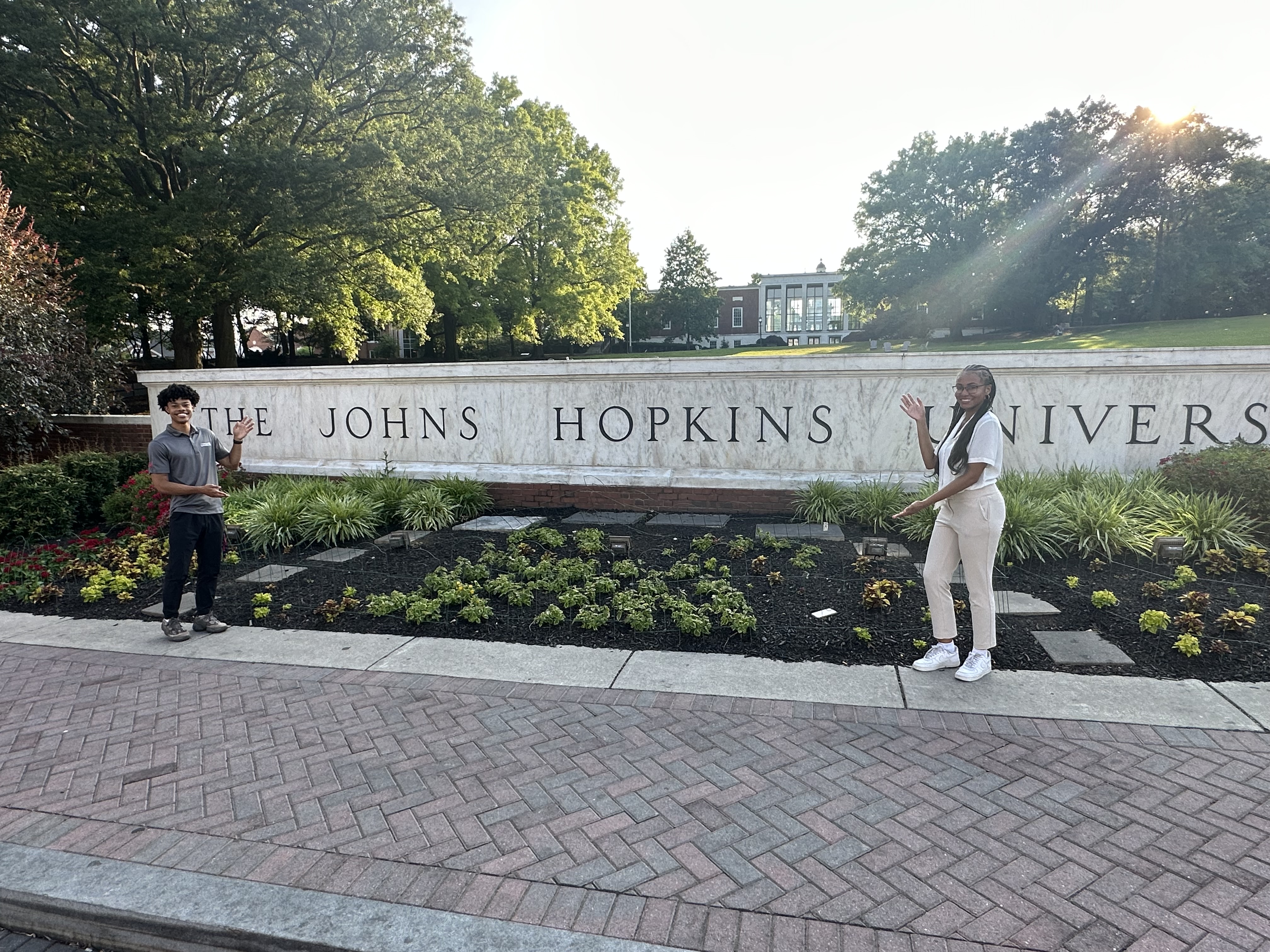
JHU research
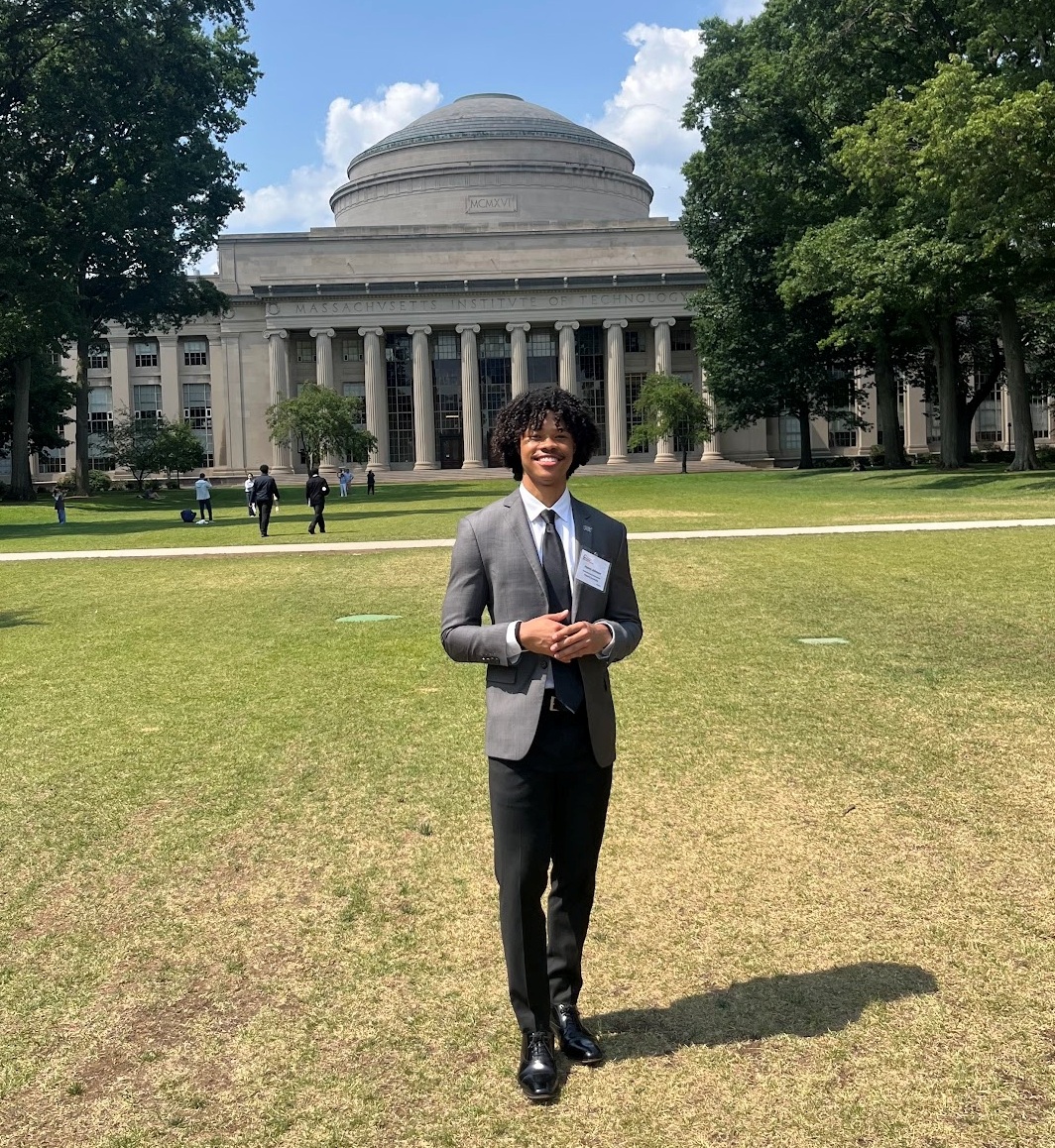
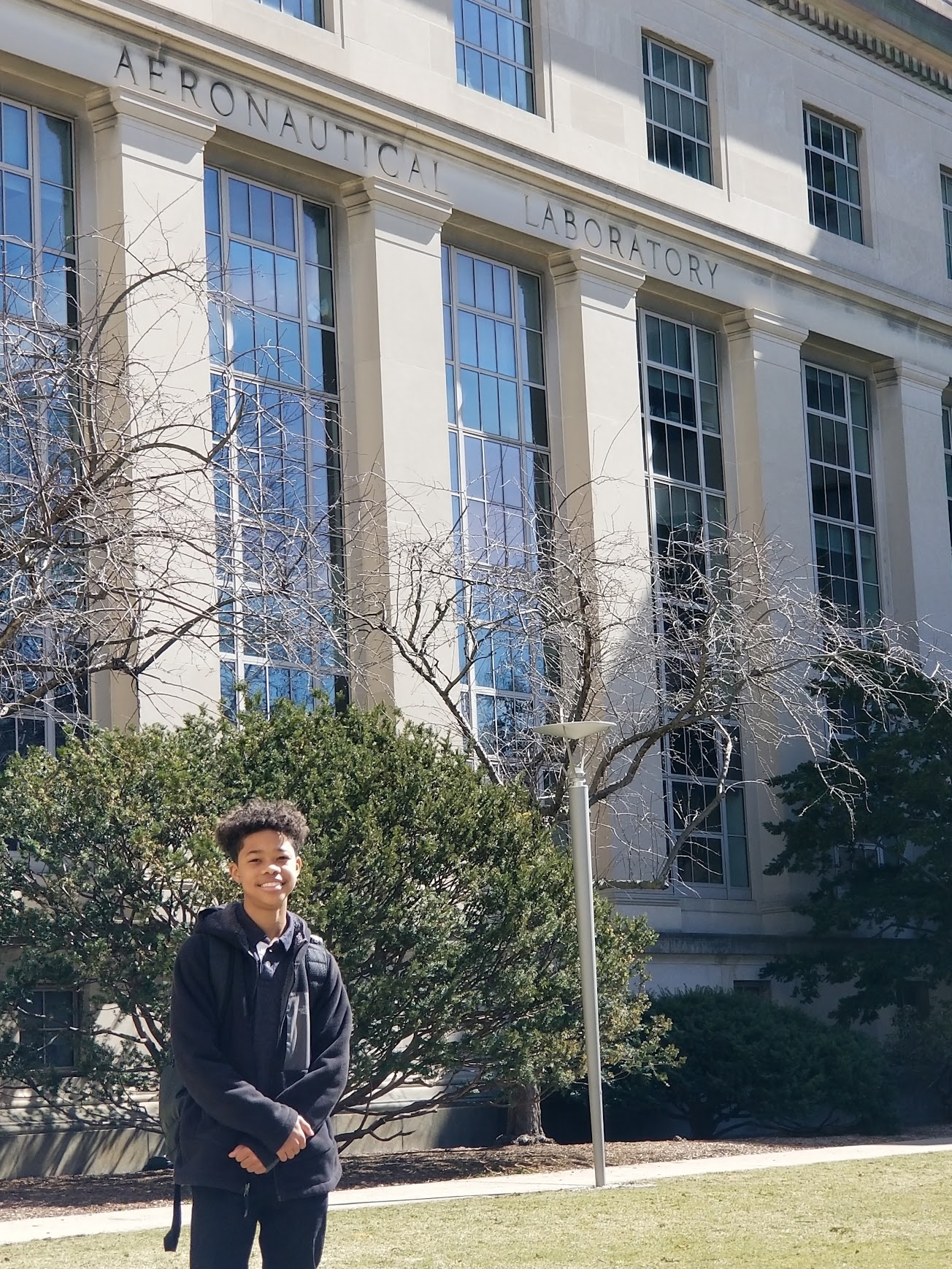
MIT Hypersonics Lab
Engineering the journey
From campus experiments to space-focused systems.
Each stop has been a different kind of lab: Howard, Johns Hopkins, MIT, Muon Space, and the startup world with Tree Technologies.

I like working where physics, computation, and people all collide. Whether it is solar panels in harsh environments or students trying to find a dining hall that is actually open, the goal is the same: make complex systems feel simple.

Howard · AFTERLAB
Built models to understand how payloads behave on the ISS so we can test smartly on the ground.
JHU · SPIRE
Helped create tools to predict synthesis conditions for thousands of new materials in seconds.
MIT · Hypersonics
Used CFD and machine learning to rethink how dust comes off solar panels in extreme conditions.
CFD & thermal modeling Machine learning for physics Student-centered tools
My Resume
Fall 2025 Resume

Fall 2025 Resume

This resume covers my coursework, research experiences, technical projects, and leadership roles at Howard, Johns Hopkins, MIT, and Tree Technologies.

Updated Fall 2025.

Loading resume...
Research Projects
Selected work
A few places where I’ve used physics, computation, and design to solve real problems.
MIT · Hypersonics Lab
MIT Hypersonics Lab
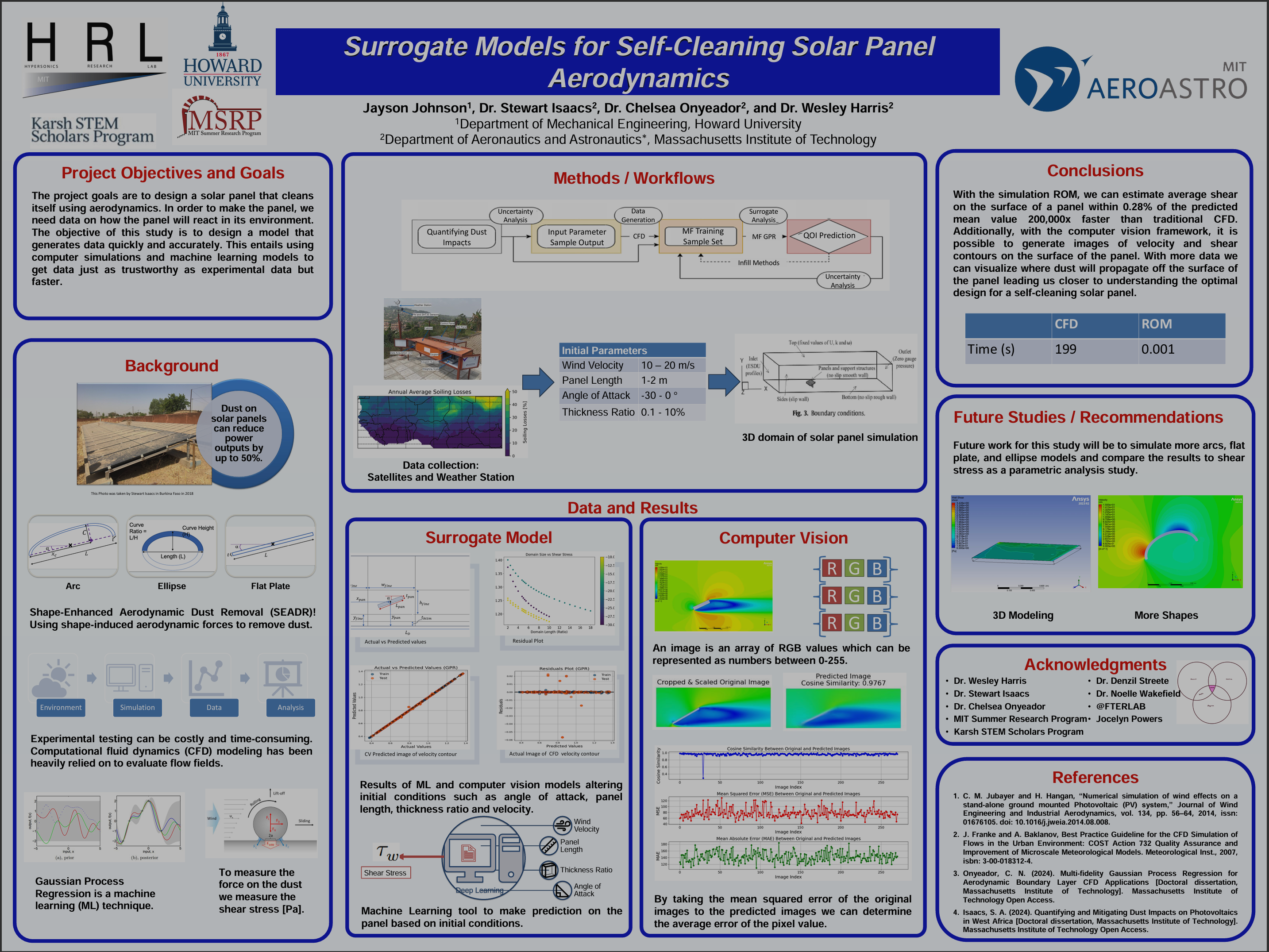
MSRP research poster

Shape-Enhanced Aerodynamic Dust Removal (SEADR)

At MIT’s Hypersonics Research Laboratory, I worked on SEADR, a project that rethinks how dust comes off solar panels in harsh environments. I built CFD models in ANSYS Fluent and then reduced them into fast surrogate models that could estimate pressure distributions in a fraction of a second.

The result: a speedup of more than five orders of magnitude while staying within a fraction of a percent of the high-fidelity solution. That makes design iteration feel more like playing with a tool than waiting on a simulation.

CFD ANSYS Fluent Reduced-order models Machine learning
Muon Space · Intern
Muon Space
Torque rod / SEADR work

From self-cleaning panels to torque rods for orbit

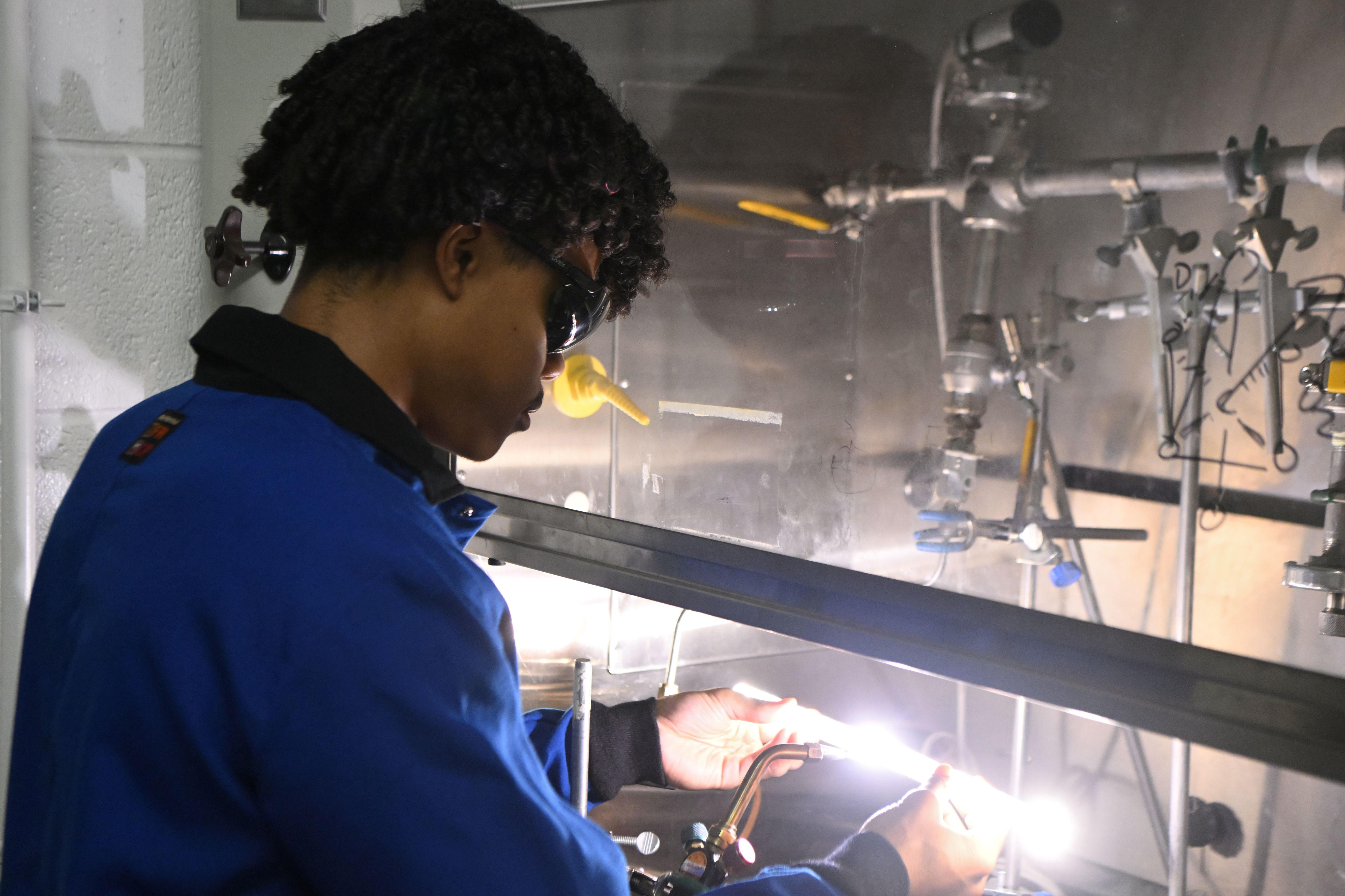
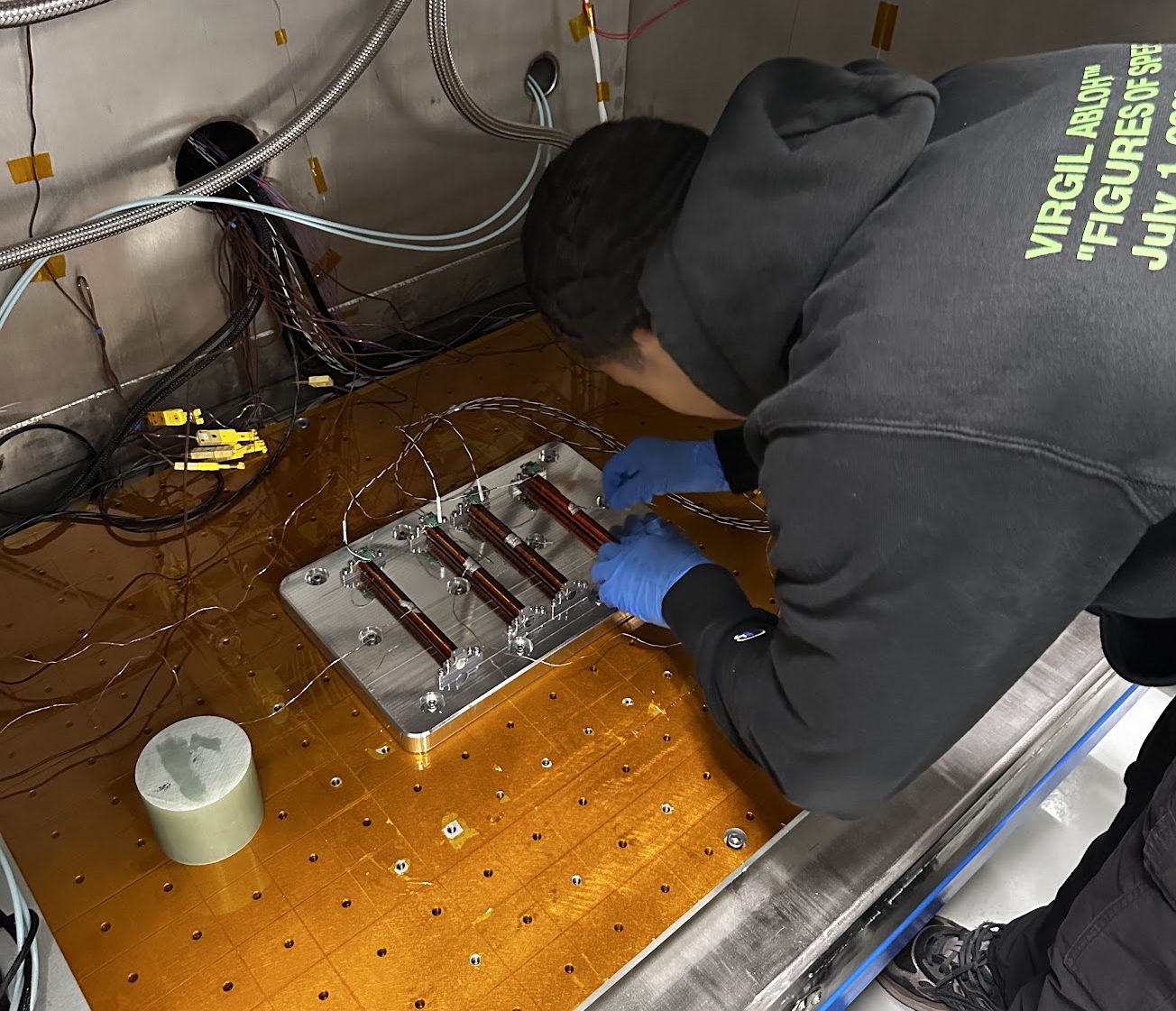
At Muon Space, I split my time between two very different but connected problems: designing self-cleaning solar panel concepts with CFD/ML tools, and helping qualify custom torque rods that keep satellites pointed in the right direction.

On the analysis side, I worked with simulation pipelines and data-driven models. On the hardware side, I helped think through test matrices, constraints, and how each design decision shows up in performance, cost, and risk.

Space systems Thermal / power Attitude control hardware Simulation pipelines
Howard · AFTERLAB
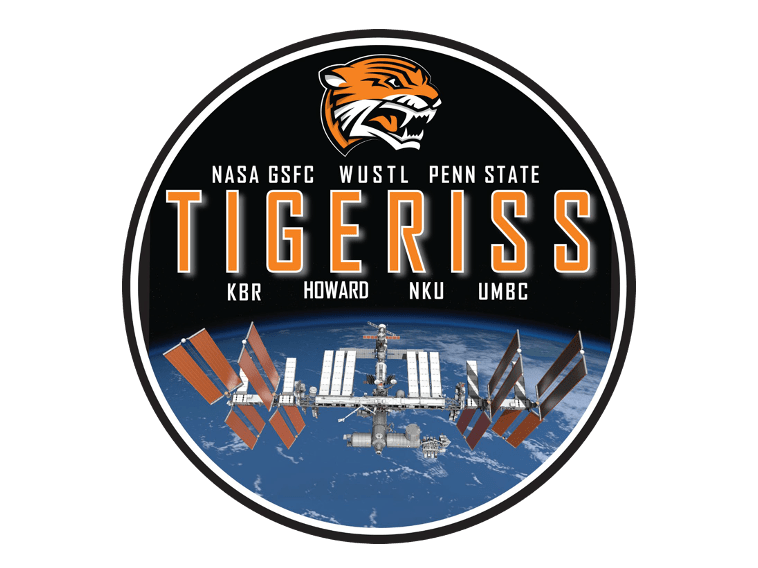
TIGERISS project
Thermal modeling

TIGERISS: Modeling payload environments for the International Space Station

In Howard’s AFTERLAB, I worked on TIGERISS, a project focused on understanding the real thermal and environmental conditions that payloads experience on the International Space Station. The goal is simple: if we know the physics of the environment well enough, we can test smarter on the ground and avoid costly surprises once the payload reaches orbit.

I built models that estimated heating, cooling, and energy exchange using realistic ISS conditions. The work helped translate complex orbital environments into simulations that could be tested in the lab — a step toward turning student-designed payloads into flight-ready systems.

Space systems Thermal modeling Simulation
JHU · McQueen Lab / PARADIM
JHU SPIRE project
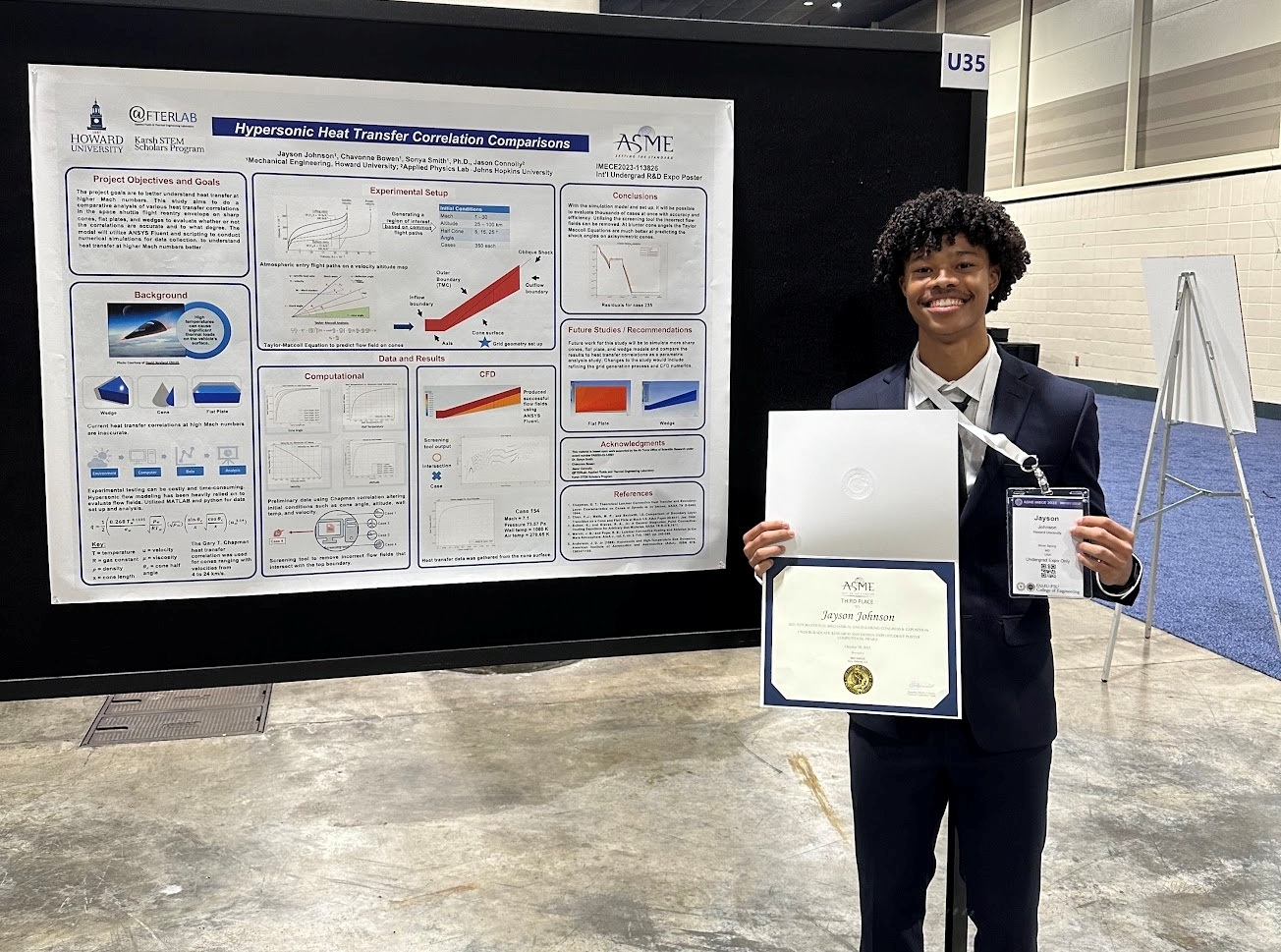
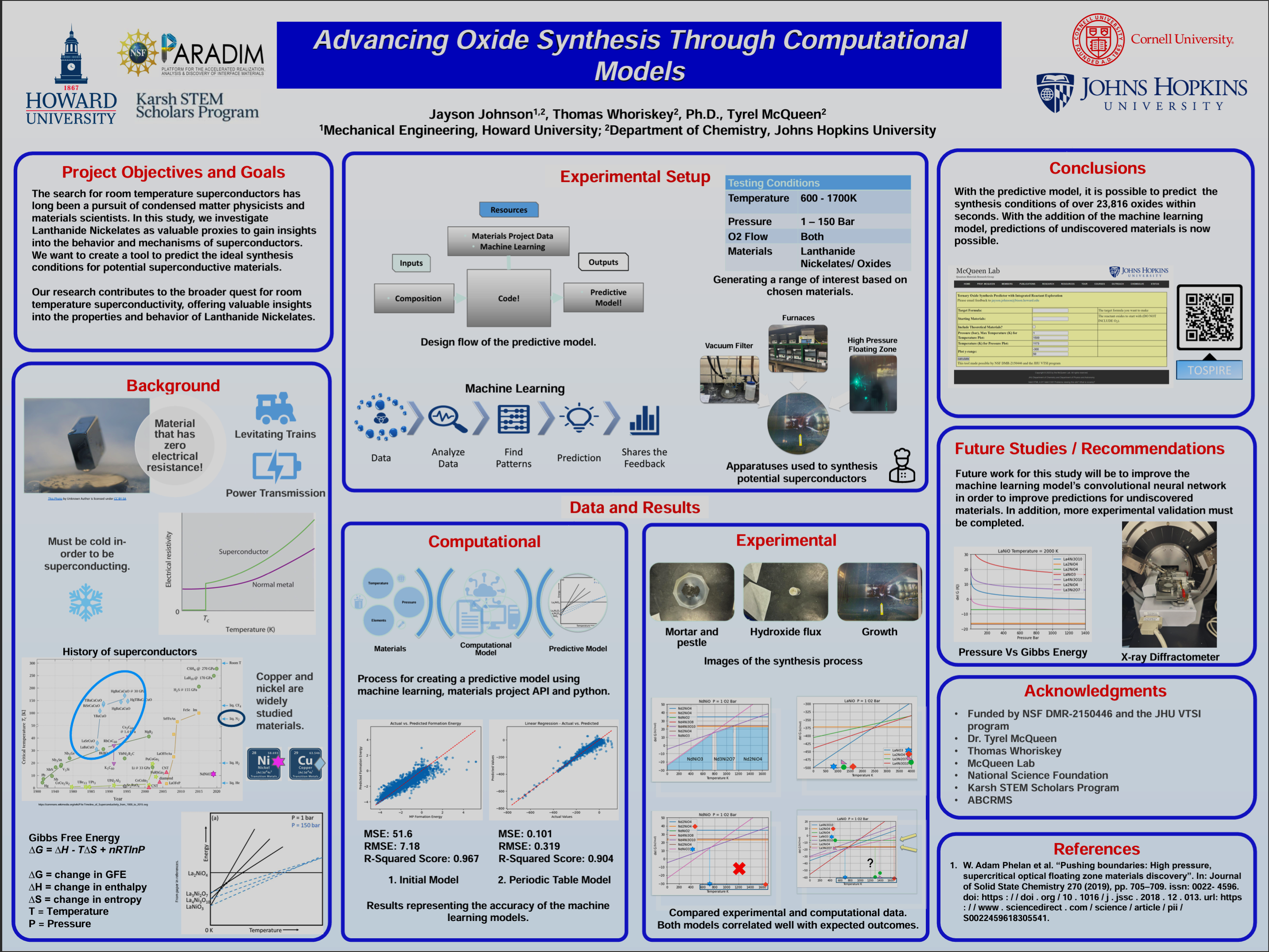
SPIRE research poster

SPIRE: Predicting synthesis for 20,000+ oxides

At Johns Hopkins, I helped build SPIRE, a tool that predicts synthesis conditions for tens of thousands of oxide materials. Instead of guessing and checking recipes in the lab, SPIRE narrows the search space so you can focus on the most promising candidates.

I worked with datasets, models, and a web interface that lets materials scientists explore recommendations in seconds. It made me realize how much impact you can have when you combine good physics intuition with good data infrastructure.

Materials informatics Data-driven discovery Python / web tools

Future of nature-centered tech

Tree Technologies

Connecting living systems with advanced computation to build campuses and cities where data flows like roots and branches, quietly powering everyday life.

Tree Technologies
Rooted · Real-time · Responsive

A neural network built from trees, people, and data.

From smart campus maps to energy-aware routing, Tree Technologies treats every tree, building, and student as part of a living information system.

Explore Rooted

Connected Campus Ecosystem

Rooted links every corner of campus—events, dining, organizations, and news—into a single, living network. Like a digital forest, each branch communicates in real time to keep students informed and connected.

  • Unified campus data
  • Real-time updates

Insightful Data & Engagement

Rooted transforms raw data into clear insights—helping administrators understand student engagement, while giving organizations the tools to reach their audiences more effectively.

  • Analytics dashboard
  • Organization insights

AI-Powered Campus Intelligence

From predicting peak dining times to personalizing event recommendations, Rooted’s AI learns how students interact with campus life to make every experience smoother and smarter.

  • Predictive insights
  • Personalized experiences

Design for Sustainability

Every interface and feature in Rooted is crafted for efficiency—from lightweight code and minimal energy usage to intuitive navigation that respects students’ time and attention.

  • Accessible design
  • Low-energy performance
Video
Featured content

Tree Technologies at Howard

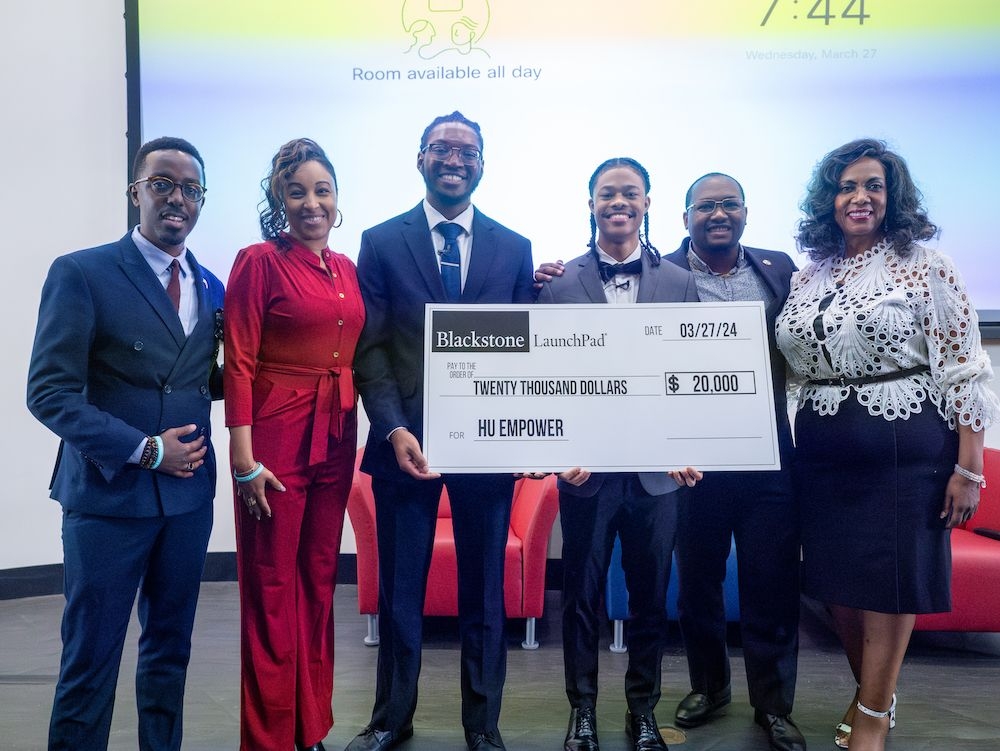
This video is the HU Empower Pitch Competiton where we won $20,000!

More videos to come!

Leadership & Brotherhood
Alpha Phi Alpha Fraternity, Inc.
How fraternity, service, and culture fit into the same story as research and startups.
Beta Chapter · Howard University
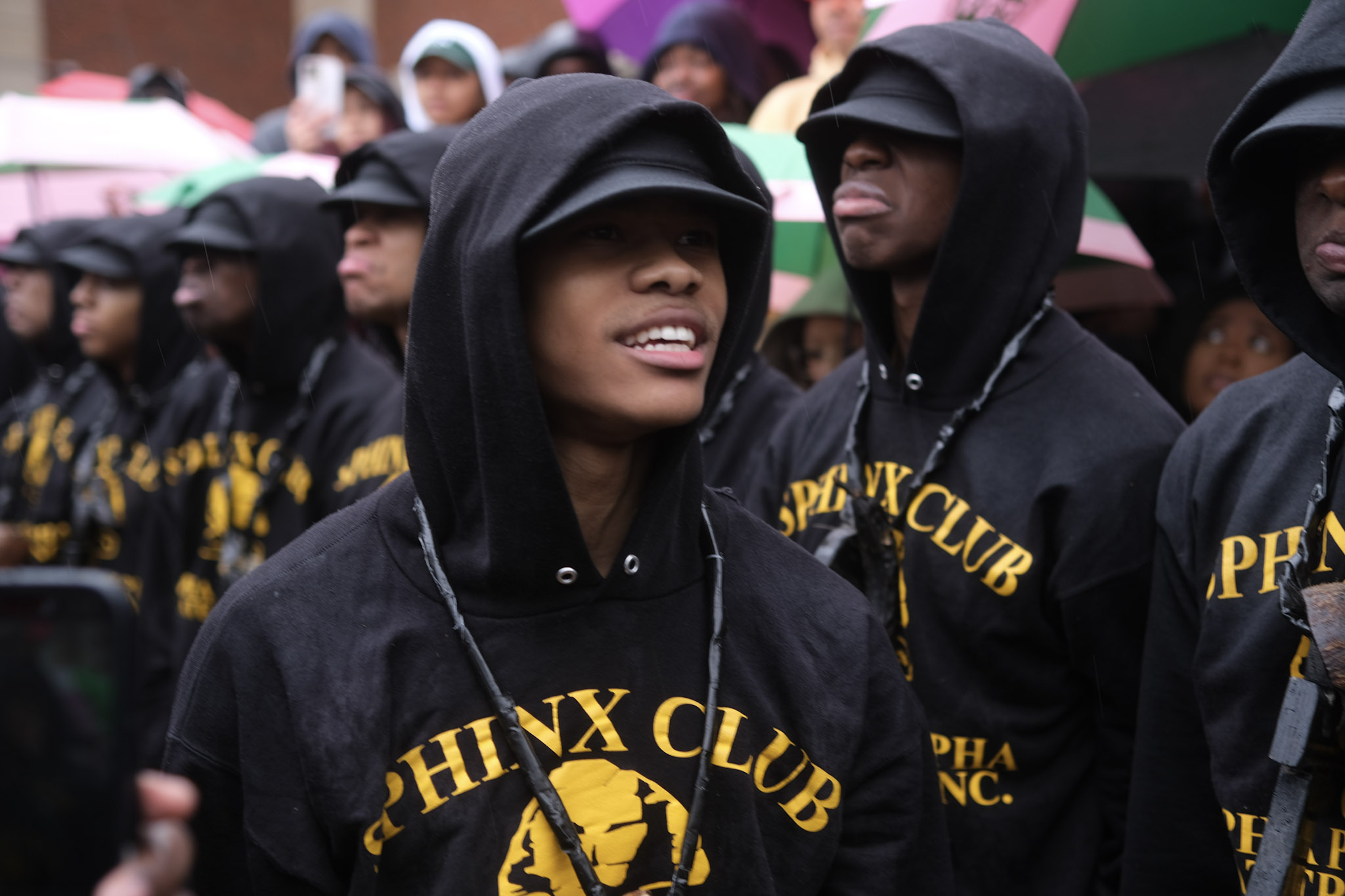
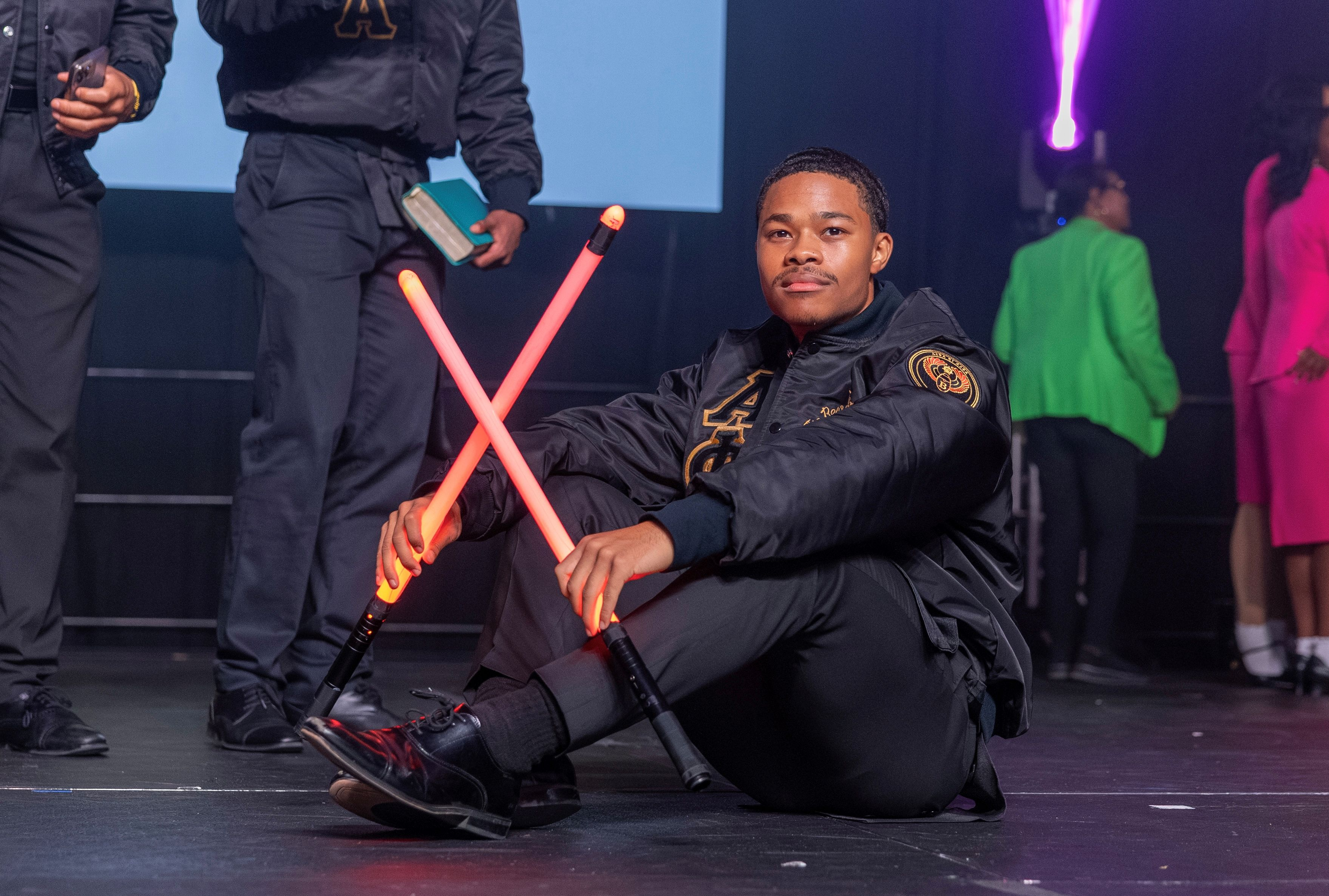
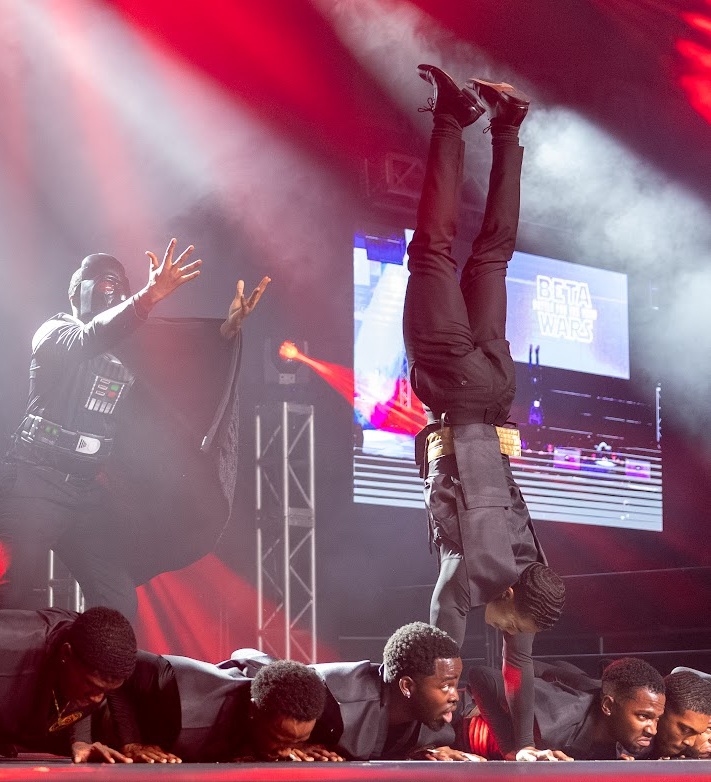
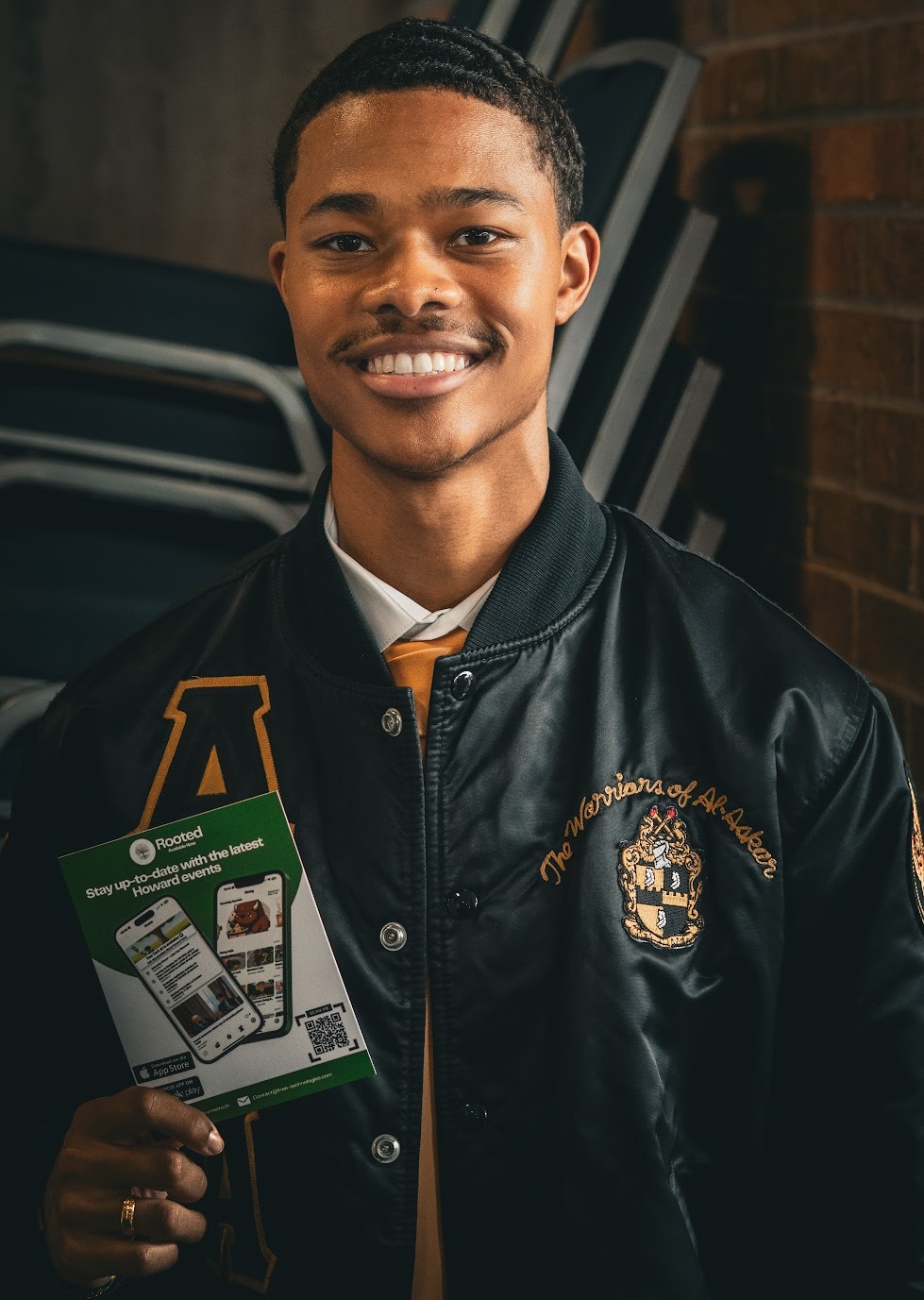
Alpha Phi Alpha event 1 Alpha Phi Alpha event 2 Alpha Phi Alpha event 3 Alpha Phi Alpha event 4

Building community through scholarship, service, and brotherhood.

As a brother of Alpha Phi Alpha Fraternity, Inc., Beta Chapter, I’ve been able to turn leadership ideas into real programs on campus — from organizing events and step performances to supporting students through mentorship and service initiatives.

The same skills I use in research and entrepreneurship show up here too: communicating clearly, planning details, and building systems that help other people win. Alpha keeps me grounded in why the work matters beyond labs and pitch decks.

Chapter leadership Campus culture Service & mentorship

Highlight from Beta Chapter events at Howard University.

Get In Touch
Let’s connect
Interested in collaborating, talking space systems, or building better tools for students? Reach out through any of these channels.

Let's Connect

I’m open to conversations about research, internships, product building, and campus partnerships. Choose a channel that works best for you.